
The Street Owns No Children
Godana lij yelem; the street owns no children.
The words followed the NYSA Sweden team through Addis Ababa. Simple in translation, heavier in meaning, they became a way of understanding the work taking place around Onesimus Children’s Development Association (OCDA), NYSA’s local partner in Ethiopia.
For more than twenty years, Onesimus has worked with children and young people who have experienced life on the streets of Addis. Its work includes care, accommodation, mentoring, education, food, employment pathways, and long-term support. During NYSA Sweden’s recent visit, the team encountered an organisation shaped less by programme language and more by consistency, patience, and daily commitment.

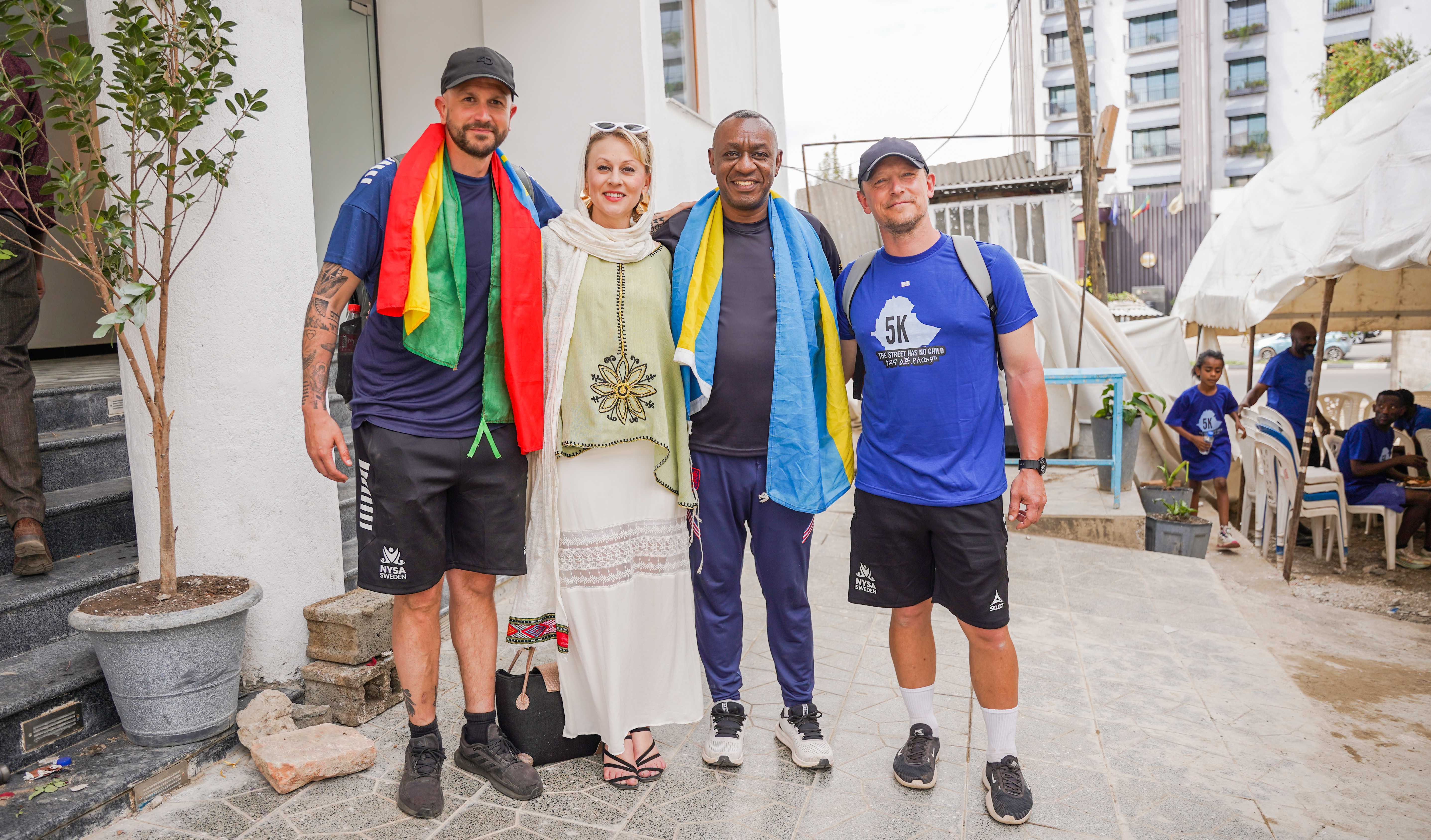
NYSA’s visit was built around coach education, staff development, practical football sessions with children, and participation in the celebration of Onesimus’ twentieth anniversary and the opening of its new facility. Emma Cotterill, Chris Mingay and Owen Southgate were enthusiastic about entering a community of care already built by local leaders over many years.Their task was to listen, learn, contribute, and ask what could be strengthened over time.
The first day focused on coach education with members of the Onesimus team. Alongside Chris and Owen, NYSA worked with coaches and staff in conversations that moved beyond drills and session plans. The focus was on values, communication, confidence, identity, and the role of sport in shaping young people’s development.
The exchange was deliberately practical. Local coaches brought their understanding of the children, the community, and the realities of the environment. NYSA brought its experience of using sport as a platform for development. The result was a shared working space, where ideas were shaped by context rather than imposed onto it.


The following days brought that exchange into motion.
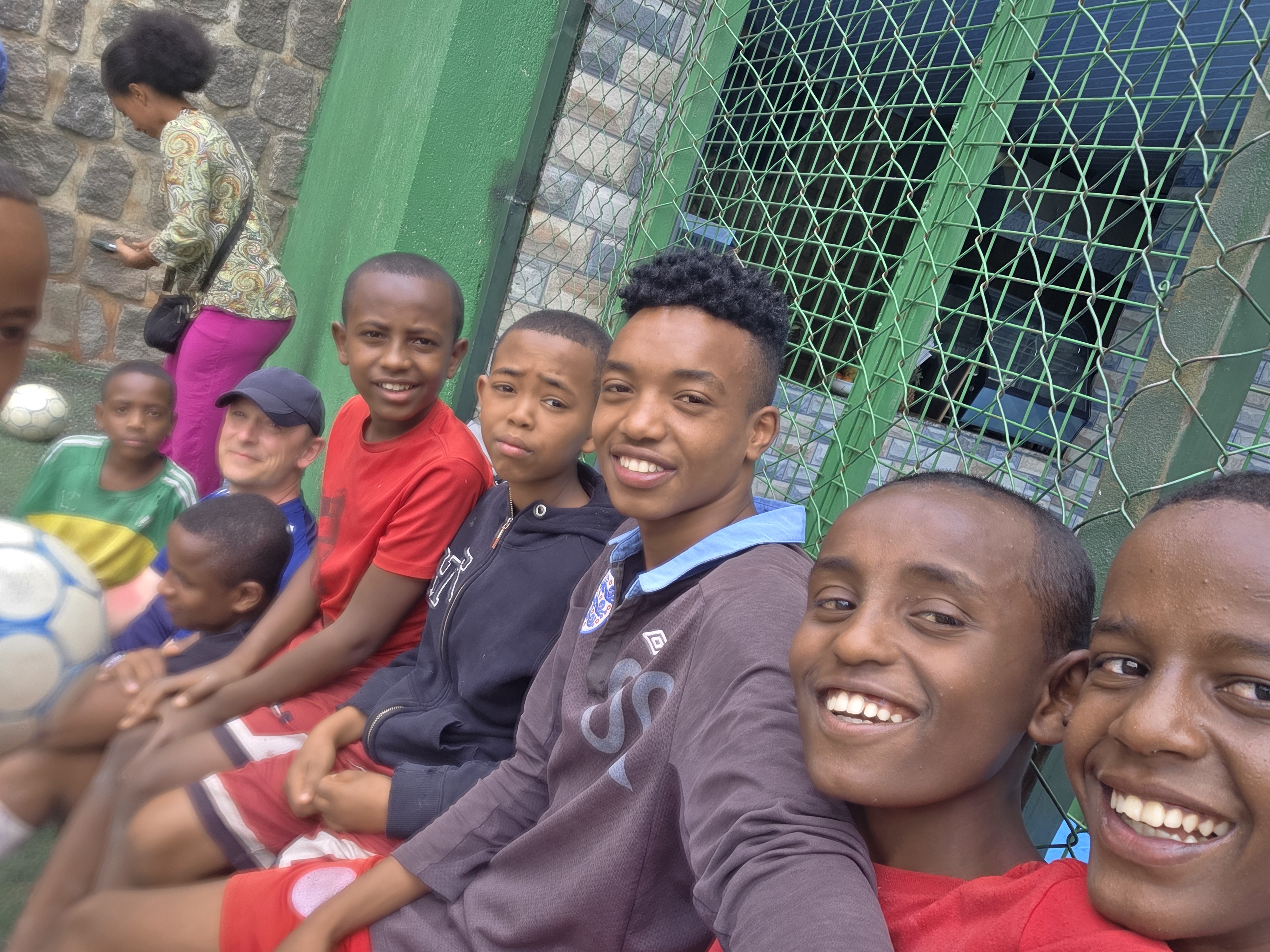
Across the week, the team worked with more than 150 children in a small space with limited resources. Sessions had to change quickly. Coaches adapted activities in real time. Language differences were present, but play created its own form of communication. Goals were celebrated. Children laughed through simple games. Coaches encouraged one another. The space was active, noisy, and full of movement, but it also carried a clear sense of participation.
The football was heartily enjoyed, but a deeper question remained top of mind: How could this globally beloved game further support the crucial environment of care already being created by local leaders?
At the heart of NYSA’s work, is the belief that sport does not create positive individual or community development all on its own.The environment around the sport matters.The people leading it matter. In Addis, it was clear that the way the children were welcomed, guided, challenged, and encouraged mattered. So how could this be further strengthened? Where could NYSA help?
A significant milestone for Onesimus gave further testament to what Nega and his team have already achieved, and what the future could hold: the celebration of OCDA’s twentieth anniversary and the official opening of its new facility in Addis Ababa. Emma co-hosted the event, playing a leading role in honouring the people, the leadership and the long-term work that led up to this moment. The staff, volunteers, families, and children whose lives and commitment have shaped, and been shaped by, Onesimus over two decades was not lost on the attendees, nor on the NYSA team.
Even so, the emotional weight of what these jubilant people were facing lingered on with the team. In a debrief, after returning home, when asked to describe their overall takeaway from the visit in one word, Chris’ answer was “faces.”
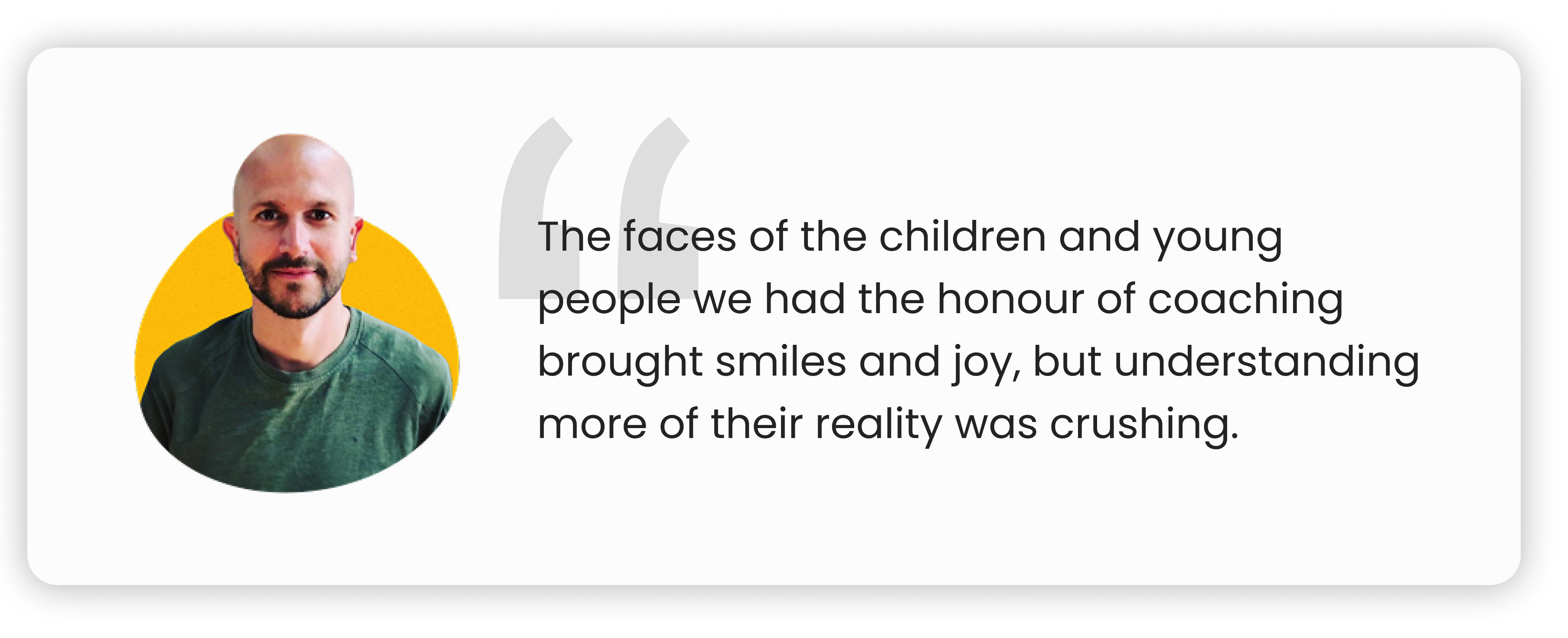
He captured a key tension that was visible in the midst of the life and celebration they saw. Development, investment, construction, and international ambition sit close to the daily reality of children still growing up without the stability and protection they deserve. One particular image remained especially difficult to forget for Chris: the new Onesimus centre, including residential care for children, standing across the street from a luxury hotel.
That weight was a reminder that the work cannot be reduced to delivering sessions, organising visits, or articulating good intentions.
The real work was in answering what kind of long-term structures can help children and young people move toward stability, education, protection, and opportunity.
That question is now shaping NYSA’s next step.
Together with Onesimus, Hope for Justice and a Slave Free Alliance, and other strategic partners, NYSA is exploring the possibility of an Addis Centre of Excellence: a locally rooted development hub that would bring together education, sport, safeguarding, residential support, training facilities, and enterprise in one integrated, locally-led model. The idea is still in its early stages. The next step towards its realisation is a disciplined feasibility phase to test demand, assess potential sites, review legal and safeguarding requirements, and build a credible operating and financial model.


NYSA is now in conversations around the feasibility phase for the proposed Addis Centre of Excellence, with sponsors, technical experts, and strategic partners who share that vision. The invitation is to help test what can be built responsibly, before major commitments are made.
For NYSA, creating serious, ethical, locally grounded pathways that can stand over time is paramount.
The visit to Addis deepened relationships, clarified need, and strengthened the conviction that sport can play a meaningful role when it is connected to care, education, local leadership, and long-term development.
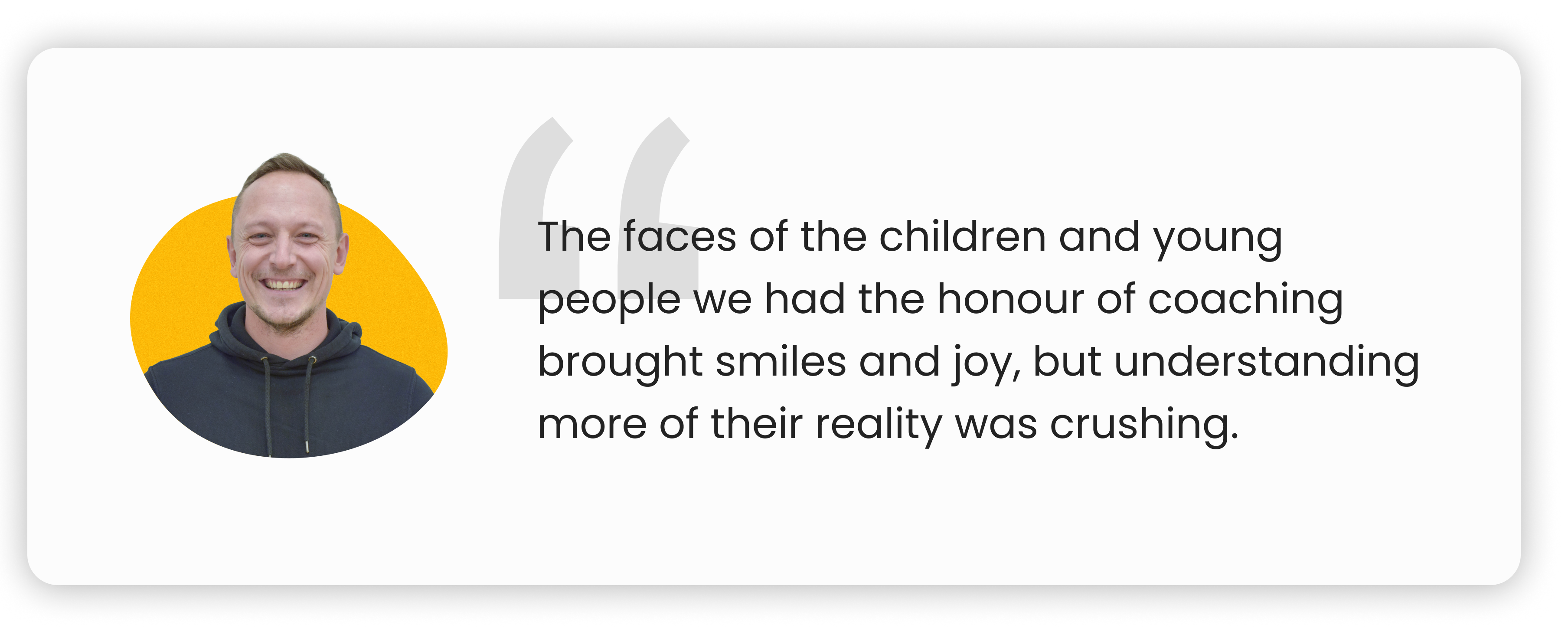
Owen’s reflection captured the spirit of the week well:
That is the kind of partnership NYSA is committed to building in Addis Ababa.
Because if the street owns no children, then every serious response has to begin with the same conviction: children belong in places of safety, dignity, development, and hope.