If September was the month people arrived, October was the month we had to decide what to do with all that energy. The FAITH Symposium in Gothenburg moved from an idea on the calendar to a long list of practical decisions, WIN-WIN entered its final stretch, FOCUS completed its first year, and new conversations opened up about where NYSA goes next. Running through almost every reflection this month was the same quiet question: not “what else can we take on?”, but “where should our energy actually go?”
- FAITH Symposium preparations
- WIN-WIN final stages
- FOCUS year one complete
- Meetings with Sida in Stockholm
- Impact system put to the test
- New interns finding their feet
Knowing When to Slow Down
Lucy describes October as a month of weighing opportunity against reality. NYSA is rarely short of ideas, partners or people who want to make something happen, and by her own account she has always preferred working out how something can be done over listing the reasons it cannot. That instinct has helped build the organisation. This month, though, it met a different kind of test.
This month has reminded me that sometimes leadership means knowing when to slow down.
Lucy
A large share of her October went into FAITH as the project heads towards its final events in November. Youth workshops, coaching discussions, the Future Coaching Handbook and the Youth Declaration are all being drawn together, and after two years of collaboration between young people, coaches and partners across Europe, the shape of the finished work is finally visible. Meanwhile, FOCUS reached the end of its first year. Going back through the experiences shared by athletes, coaches and clubs in Sweden, Finland and Latvia underlined a principle Lucy keeps returning to: listening and understanding have to come before anyone starts building solutions.
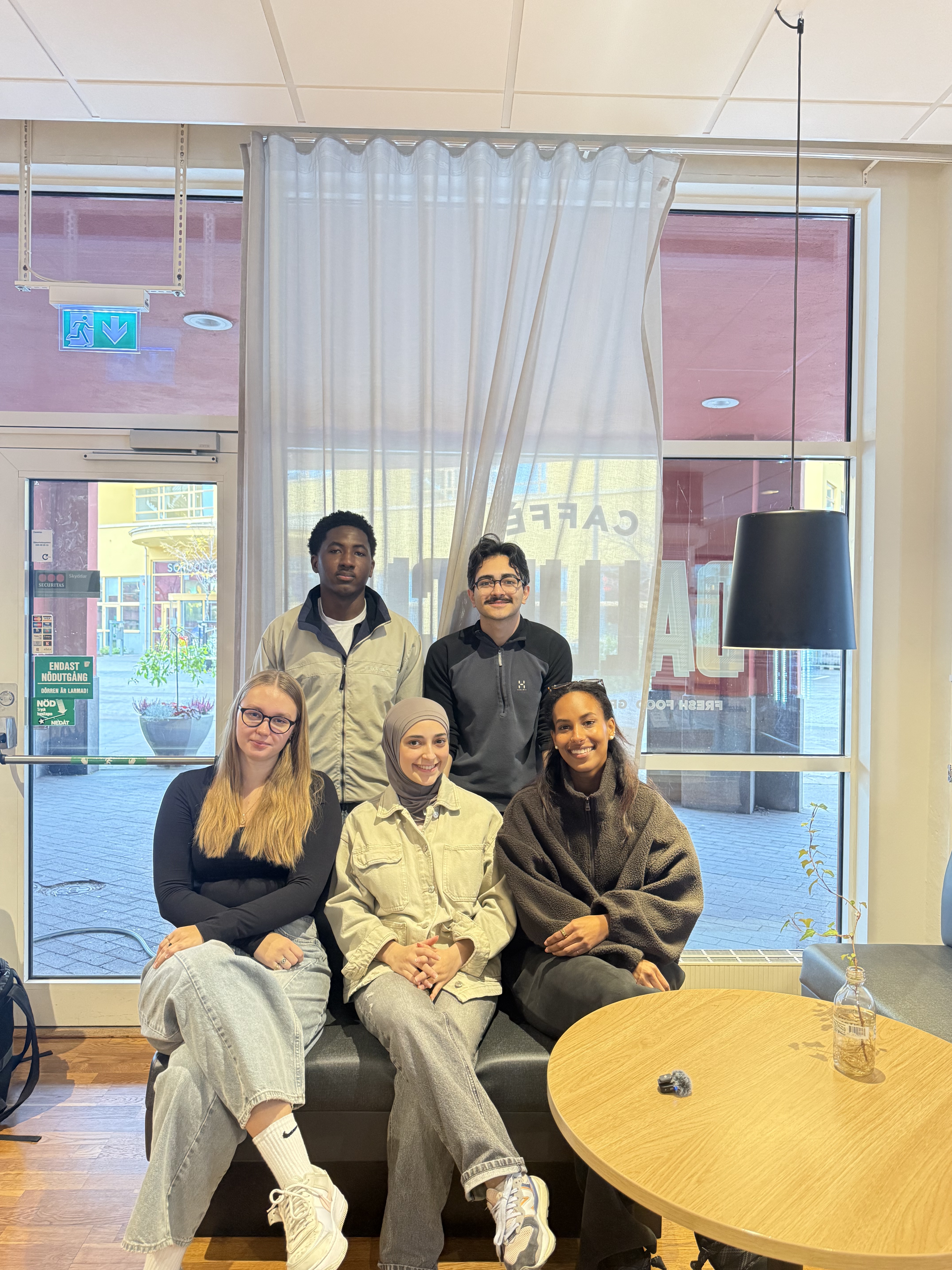
The new interns have also been finding their place, contributing to everything from media and storytelling to club development. For Lucy, watching that happen is a useful correction to the habit of measuring growth only by how many projects an organisation delivers. The opportunities it creates for other people count too.
The harder conversations of the month were about the future. New funding opportunities, possible international partnerships and ambitious ideas are exciting, but each one carries responsibilities, and the team had to look honestly at capacity, finances and priorities. One example was a potential expansion of NYSA’s activities in Ethiopia. Building on existing relationships there was a genuinely appealing prospect, yet it also meant facing up to the preparation, resources and long-term commitment it would demand.
It reinforced something I am still learning: not every good opportunity is the right opportunity at the right time.
Lucy
None of this means NYSA is becoming less ambitious. After years of taking chances, trusting people and finding creative routes forward, Lucy knows how much those habits have made possible. What October added was the recognition that the energy behind them has to last. With the FAITH final events ahead and planning for 2027 already underway, she finds herself thinking less about how much more NYSA could do and more about how to keep doing what matters, and doing it well.
Perhaps that is another part of growth. Learning that ambition is not only about creating new opportunities, but also about having the confidence to make choices that protect the people, relationships and work we have already built.
Lucy
Conversations in Stockholm
Emma’s October continued the careful groundwork behind NYSA’s international ambitions, and one of its key moments took place in Stockholm. She travelled there with Tristan Rickley Boumpoutou, NYSA’s Global Social Impact Intern, for meetings with Sida and with Katrin Månsson, Sweden’s Ambassador to Côte d’Ivoire, Benin, The Gambia, Guinea and Togo.
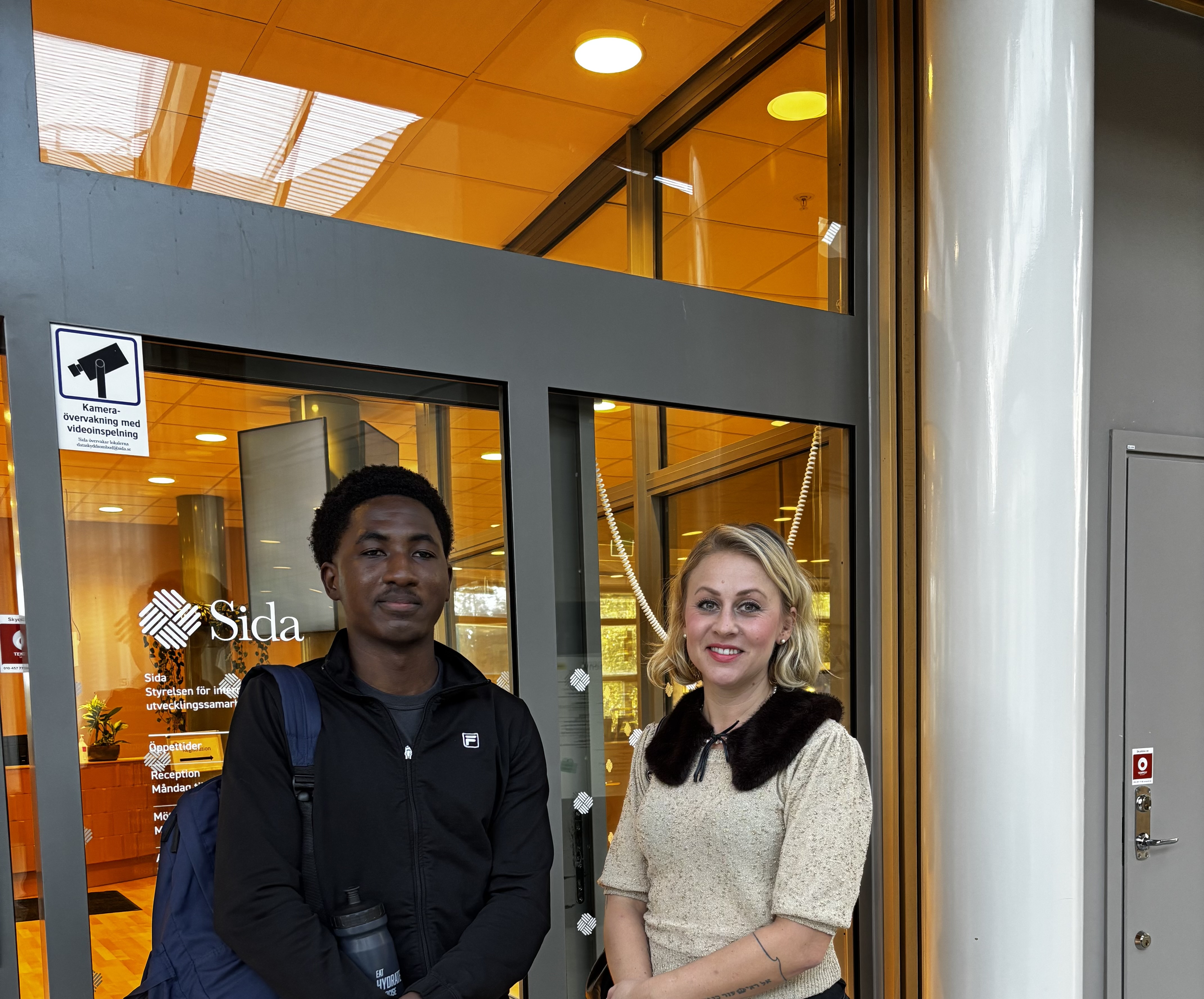
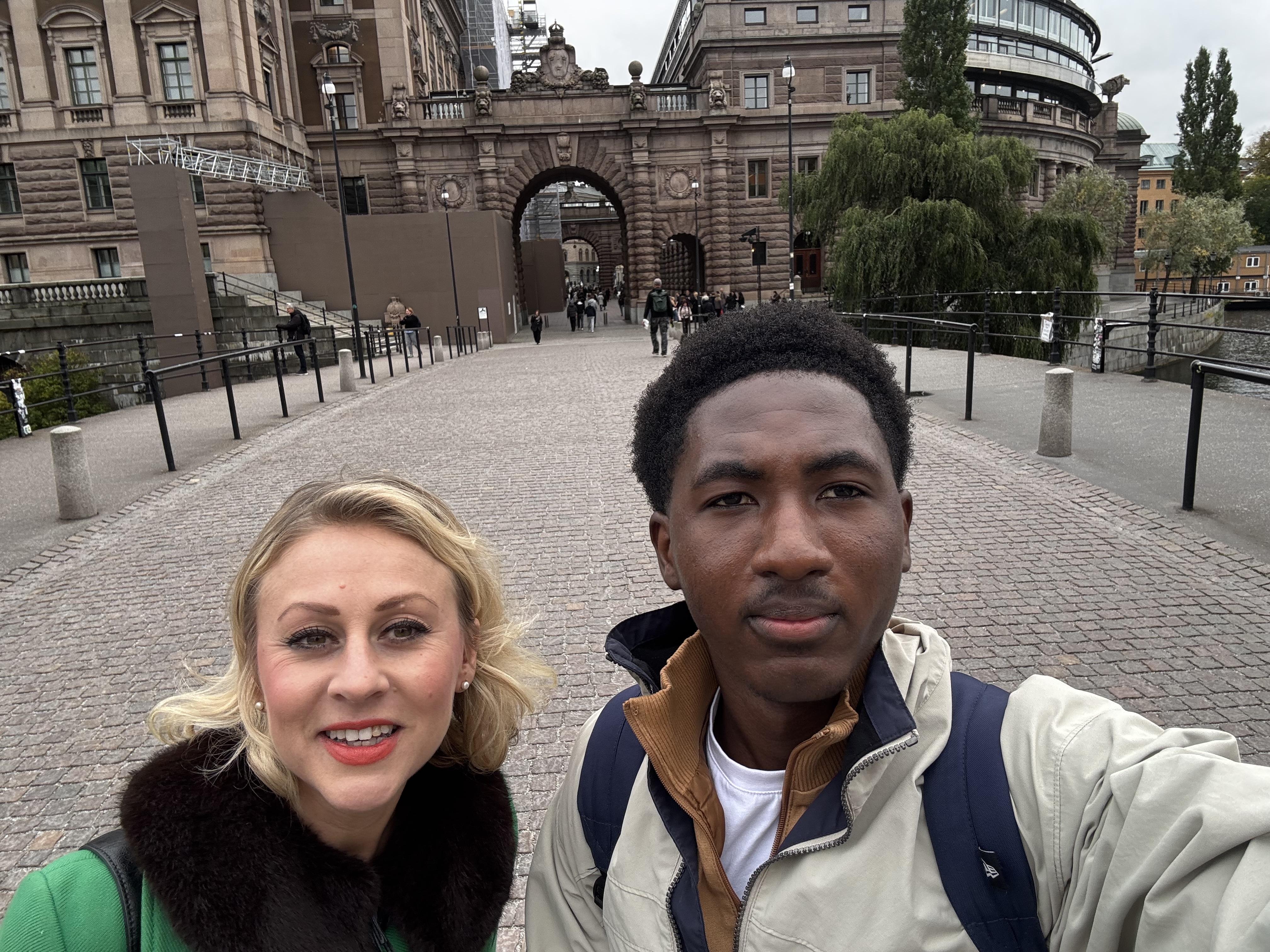
These conversations gave us valuable insight into the changing international development landscape and helped us build connections that can support our work with partners in Africa and beyond.
Emma
Set alongside the rest of the month, the trip fits a wider pattern. Before NYSA commits to new international work, the aim is to understand the landscape properly and to know who it is building with. Conversations like these are where that understanding starts.
The Work After the Work
Geri’s favourite moment of October happened in Jönköping, at the Ung Kraft event, which brought together people working to support young people and develop leadership in the local community. Different organisations take different routes into youth development, but listening to them, he was struck by how often the challenges and ambitions underneath turned out to be the same, and by how naturally initiatives like Ung Kraft connect with what NYSA is doing.
Having lived and worked in Sweden for a few years now, I find it increasingly rewarding to become more involved in these networks and better understand how different organisations work together. These are also the kinds of connections that can lead to interesting opportunities in the future, even if there is no immediate collaboration planned.
Geri
Back at his desk, two EU projects dominated the month. WIN-WIN is now in its final stages, and much of Geri’s time went into the remaining activities in Sweden, stakeholder engagement, dissemination, and making sure the documentation and reporting are in order. The project’s focus on helping student-athletes develop skills beyond sport and plan for life after it feels personal to him, given his own background in football and education. At the same time, the FAITH Symposium in Gothenburg has meant a long list of practical details to coordinate, from accommodation, venues and catering to promotional materials, all while keeping partners and potential participants informed.
Seeing a project through to its end has changed how he thinks about project management. Delivering the activities is only part of the job. The work also has to be properly documented, its results shared and the last responsibilities followed through. And then there is the question that comes after all of that.
We spend a lot of time developing activities, building relationships and creating resources, but I think it is equally important to consider how these can remain useful beyond the project itself. The real value of a project like WIN-WIN will depend on how its results and lessons can continue to be used after the official project period comes to an end.
Geri
He is also clear about what he wants to get better at. With several activities running at once, it is tempting to focus on whatever is due today rather than what will need attention in a week or two.
One area I still want to improve is being more proactive in identifying potential challenges before they become urgent.
Geri
Ambition, Recalibrated
Vanessa is honest that October was challenging, productive and, at times, stressful. University exams arrived at the same moment as some of the busiest FAITH preparations, and missing meetings for academic reasons left her feeling disconnected from the team’s progress. At one point she was joining NYSA meetings in the middle of study sessions, simply to stay in the loop.
Her contribution to FAITH was wide-ranging: finalising the agenda, budget planning, visual materials, social media content, the Youth Declaration and the evaluation activities. The piece she is proudest of is the staff rotation plan. Rather than simply handing out responsibilities, she spoke with people individually to understand their strengths, interests and capabilities, and built a plan that balances what the event needs with what people would actually like to do.
I’ve struggled with perfectionism for years, and accepting that I couldn’t give everything I wanted to initially felt like failure. However, I realised that constantly striving to excel in everything doesn’t work.
Vanessa
That realisation led to a real decision: she chose not to accelerate her studies, partly because she genuinely enjoys her work at NYSA. It was not an entirely guilt-free choice, she admits, but it also felt freeing.
The month also taught her a good deal about leadership. When preparations were moving more slowly than she expected, she became more direct about expectations. She worried at first that this might discourage people, but it helped the team regain momentum. A leadership course added another layer, showing her that her naturally task-oriented style needs to be balanced with attention to relationships.
Becoming more direct helped us make progress, but also reminded me that my expectations aren’t universal and different working styles aren’t inherently negative.
Vanessa
What stayed with her most was a small moment: seeing her colleagues again after exams and sharing a few laughs. It reminded her that the people and the sense of belonging are a big part of what keeps her motivated. Looking ahead, her priority is clear. She wants FAITH to be a success, and she wants the team to create something memorable together and enjoy what they have achieved.
Letting Go of the Doing
In September, Vala laid the foundations for how NYSA defines, records and communicates its impact. October was when he found out whether they would hold. He ran the full evidence system end to end on NYSA’s completed Erasmus+ projects, bringing funding data, activity records and beneficiary numbers together into one consistent picture. It was the system’s first encounter with real projects rather than theory, and some of the definitions he had carefully worked out on paper needed adjusting straight away.
From there he moved on to KICK, a new Erasmus+ project, where the system is being built in from the start instead of reconstructed afterwards. Working forwards, he found, is much cleaner than working backwards.
The impact work was my highlight of the month. Not because it went smoothly, but because it started to feel like something real rather than something planned.
Vala
The other change was less visible but just as significant. On the media side of the FAITH Symposium, Vala’s role shifted from making the content himself to overseeing a team of interns who make it. His job now is to make sure the right people are on the right tasks, that what is asked for gets delivered and that the quality holds.
I am more comfortable being the person who makes the thing than the person who checks whether someone else made it well enough. But I am adapting. When someone on the team does something well without needing me to touch it, that is worth more than anything I could have produced alone.
Vala
October also brought to a close his first stretch of full-time work, combining his NYSA role with a university internship since August. The workload itself was manageable. The real challenge was switching between very different kinds of work: systems and data one hour, people and stories the next, then project logistics, then coaching someone through a task he had never delegated before. He now knows he can handle the load, and he also has a clearer sense of where his limits are.
The FAITH Symposium will be the first live test of both the impact evidence system and the media team working together on an event. For Vala, it brings together everything October was about: the system, the team, and learning to hold both without trying to do everything himself.
Giving an Event Its Look
For Yoana, October was a month spent turning the FAITH EU Project Symposium into something people will be able to see and hold. The symposium is a youth-led, interactive event exploring how values-led sport and Future Coaching can support young people’s wellbeing, inclusion, leadership and future aspirations. In other words, it is about showing that sport can be far more than physical activity.
Her list of deliverables was long: banners, posters, flyers, social media content, activity support materials, lanyards and official project documents, along with updates to the project website so that it reflects the event and stays accessible. The most interesting challenge was keeping one consistent visual identity and message across formats with very different purposes, from a large printed banner to a quick social media post, while staying true to the values and objectives of FAITH.
It is rewarding to see how media and content development can support a project beyond simply communicating information; it can help create the atmosphere, identity, and accessibility of an entire event.
Yoana
The work was also a lesson in collaboration. The preparations brought her together with several of the new interns, which meant sharing ideas, dividing responsibilities and getting to know colleagues with very different perspectives. What makes it meaningful for her is knowing that every poster, flyer and activity resource will become part of a real experience for the young people taking part.
What started as planning, designing, writing, and coordinating is becoming a complete event with a clear purpose and a message worth sharing.
Yoana
Finding a Rhythm
For Leonarda, October felt steadier than September. She did not have more on her plate, but settling into a daily routine changed how the month felt. In September there had been moments when she felt distant and unsure where she fitted in. A clearer rhythm made it easier to see what she was working on and where she wanted to put her energy.
I think I underestimated how much a stable routine affects not only how much I get done, but also how grounded I feel.
Leonarda
Much of her NYSA work this month involved supporting others. She helped with preparations for the FAITH Symposium and contributed to FOCUS by researching resources and giving feedback on, and editing, the project’s academic article. That brought her back to FOCUS from a new angle: in August she had watched patterns emerge from the SenseMaker data, and now she could see those insights being shaped into something that can be shared more widely.
Where she felt herself stepping forward was in coaching and mentoring. Through the Ambassador Programme she has put herself forward to mentor young athletes, and she is thinking seriously about putting her coaching education into practice, alongside a personal trainer course she is taking on the side.
So far I have mostly explored athlete support from a distance, through frameworks, data and projects. Now I want to find out what it looks like when I am the one working directly with an athlete. I know it will be messier than it looks on paper, but that is also part of why I want to do it.
Leonarda
An AI course left her with more questions than answers. She can see how useful technology could be in sport, but she also found herself asking what growing reliance on it does to people and their wellbeing, and what tools that need so much energy cost the environment. She has not settled whether it is worth it. What she did notice was that this was one of the first times her own values pushed back against something she also finds interesting.
She is also candid that her Instagram went quiet this month, and that the reason was not only a lack of inspiration. Some of the old fear of being visible and judged had crept back in.
Recognising the pattern is different from being stuck in it, and I would rather name it here than tell myself it was only about inspiration.
Leonarda
Her plans for the coming months are about turning intention into practice: starting to coach and mentor even if the first attempts are imperfect, creating content again beginning with something small, and continuing to think about where she stands on technology in sport.
Towards Gothenburg
November will be dominated by the FAITH Symposium in Gothenburg on 20–21 November, the moment when two years of workshops, handbooks, declarations, posters, rotation plans and evidence frameworks finally meet the young people they were made for. WIN-WIN will draw to a close, FOCUS moves into its second year, and planning for 2027 continues in the background.
Looking back, October was not the month NYSA did the most. It was the month the team got better at choosing: which opportunities to pursue and which to let wait, which tasks to hand over, which commitments to step back from, and which routines are worth protecting.
That kind of growth rarely makes headlines. But it is what makes the next big thing possible.